Almost every body treatment on your menu starts the same way: get the skin smooth first. It is the opening act, the warm-up, the bit your client remembers when they run a hand down their arm on the way out. But there are a lot of ways to exfoliate a body, and they differ in comfort, prep time, aftercare and how well they slot in before the next step. Here is an honest comparison of the main methods, scrubs, dry brushing, acid peels, microdermabrasion, pre-wax prep and BUFF & GLOW, so you can choose what fits your treatment room.
Why the surface matters
The American Academy of Dermatology describes exfoliation as removing dead skin cells from the outer layer of the skin, either mechanically (a brush, pad, sponge or scrub) or chemically (alpha and beta hydroxy acids that dissolve them). It also cautions that exfoliation is not for everyone and can do more harm than good if done poorly (AAD, How to safely exfoliate at home).
For sunless tanning, the AAD’s self-tanner guidance starts with exfoliating, with extra time on the elbows, knees and ankles where skin is thickest, and notes those joints tend to absorb more tanner than the rest of the skin (AAD, How to apply self-tanner). That is the practical reason prep shows up first on so many menus.
So the useful questions for your room are how comfortable each method is for your client, how long it takes, what aftercare it needs, and whether it leaves skin ready for the next step in the same visit.
The main methods, honestly
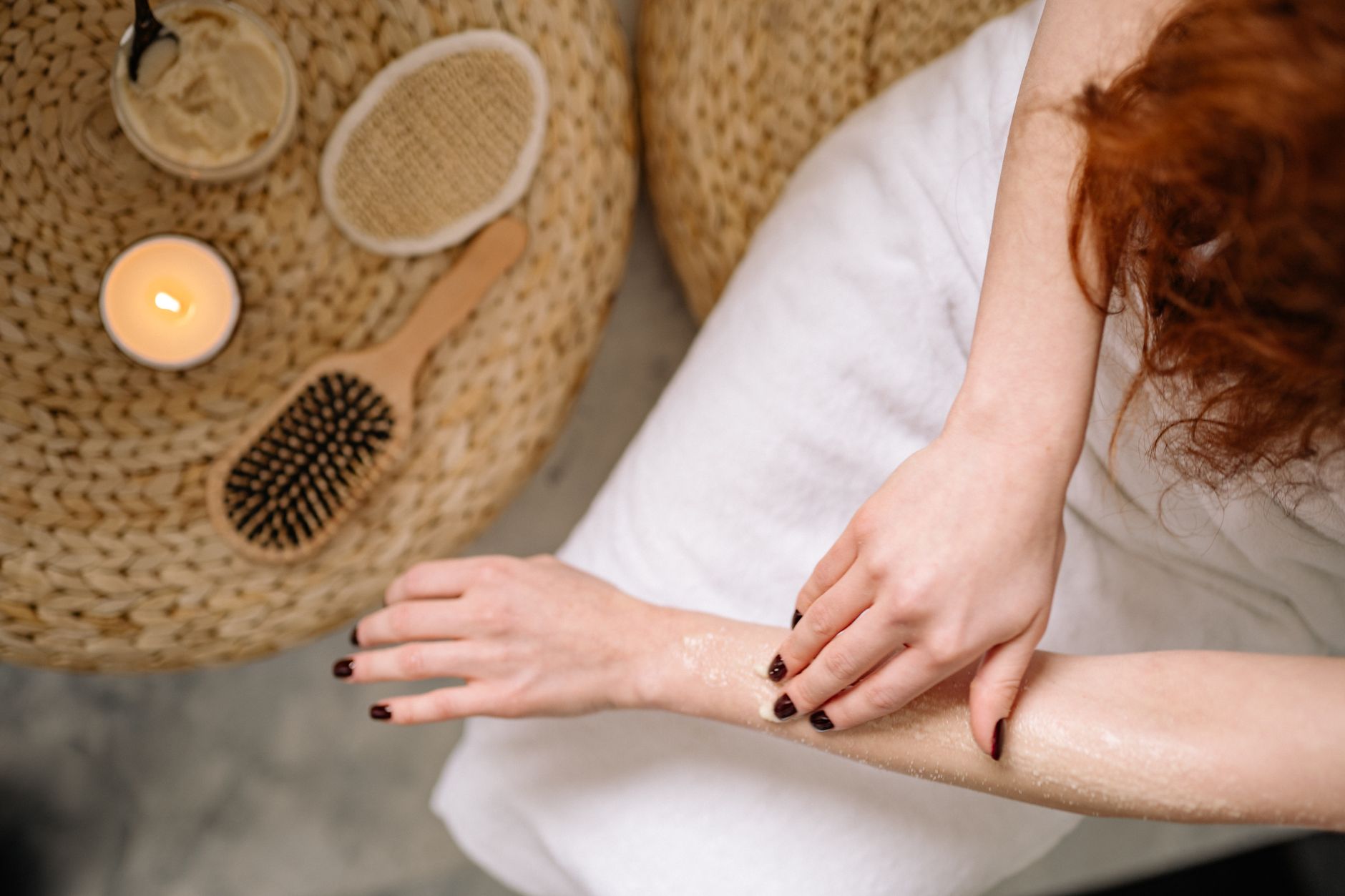
Manual scrubs (salt and sugar). The classic: grains in an oil or cream base, worked by hand. Inexpensive and indulgent. Results depend on the hand doing the work, coarse salt can be too harsh on sensitive or freshly shaved skin, and an oily base has to be fully removed before anything that needs clean, dry skin. The AAD suggests gentle small circles for about 30 seconds and a lukewarm rinse, and advises avoiding aggressive mechanical exfoliation for clients with darker skin tones or a tendency to dark spots, since it can increase pigmentation.
Dry brushing. A bristle brush swept over dry skin. Quick and easy, and pleasant as a habit. It is light, so it is better as a home routine than as the main prep step before a treatment that needs a consistent surface.
Chemical exfoliation and body peels (AHAs and BHAs). Acids loosen dead cells without scrubbing. The FDA says alpha hydroxy acids increase the skin’s sensitivity to UV light, that the effect fades within about a week of stopping, and that sun protection is advisable while using them (FDA, Alpha Hydroxy Acids). The AAD says even a light, refreshing peel can leave skin red for a few days, sometimes followed by scaling, and that a series of three to five may be needed (AAD, Chemical peels: FAQs). That aftercare is why acids usually sit on a different day from same-visit add-ons.
Body microdermabrasion. A handheld device removes the top layer of skin. The AAD says there is no downtime, though skin can be pink, red or slightly swollen for a day or two, that most patients need a series of 5 to 16 treatments, that results tend to be temporary, and that anyone who has taken isotretinoin in the past six months has a higher risk of complications (AAD, Microdermabrasion: FAQs). A full service in its own right, with equipment to match.
Pre-wax and pre-sugaring prep. A quick, targeted cleanse and light exfoliation before hair removal. Purpose-built for one area and one job rather than a full-body smoothing service.
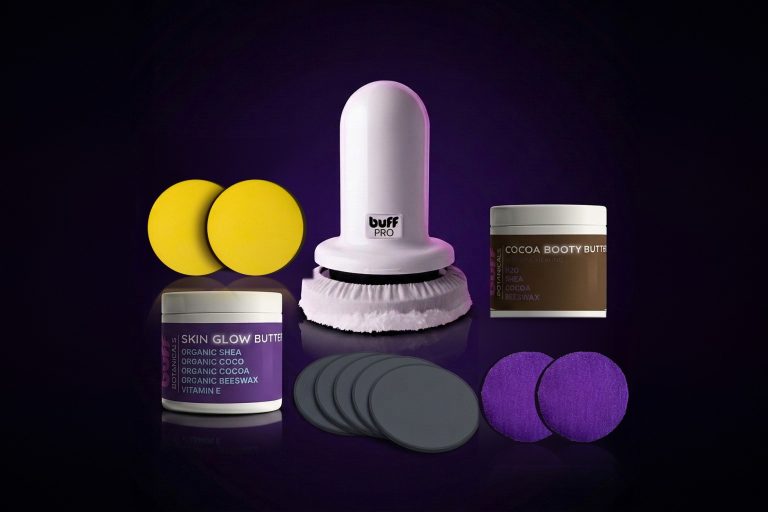
BUFF & GLOW crystal exfoliation. Step one of BUFF & GLOW pairs a BUFFSMOOTH exfoliator with BUFF PRO’s multi-axis, random-orbital motion. Instead of a hand pressing grains into the skin, the device supplies the motion and the technician guides it. It polishes the outer surface so skin feels smoother, with no oil base to clean off. Follow the product directions for use and suitability.
Side by side
| Method | How it works | What to plan for | Best for |
|---|---|---|---|
| Manual scrub | Grains in an oil or cream base, by hand | Varies with the hand; base must be removed; too coarse for some skin | Pampering add-ons |
| Dry brushing | Bristles on dry skin | Light; better as a home habit | Daily routine |
| Acid peel (AHA, BHA) | Acids loosen dead cells | Redness or scaling for days; sun sensitivity; series | Texture and tone, on its own day |
| Body microdermabrasion | Device removes the top layer | Pink for a day or two; series of 5 to 16; isotretinoin screening | Stand-alone resurfacing service |
| Pre-wax prep | Light cleanse and exfoliation of one area | Spot-focused | Hair-removal prep |
| BUFF & GLOW step one | BUFFSMOOTH moved by BUFF PRO’s random-orbital motion | Follow product directions; consumable exfoliators | Smoother-feeling skin and a polished start to a body service |
Where BUFF & GLOW fits your menu
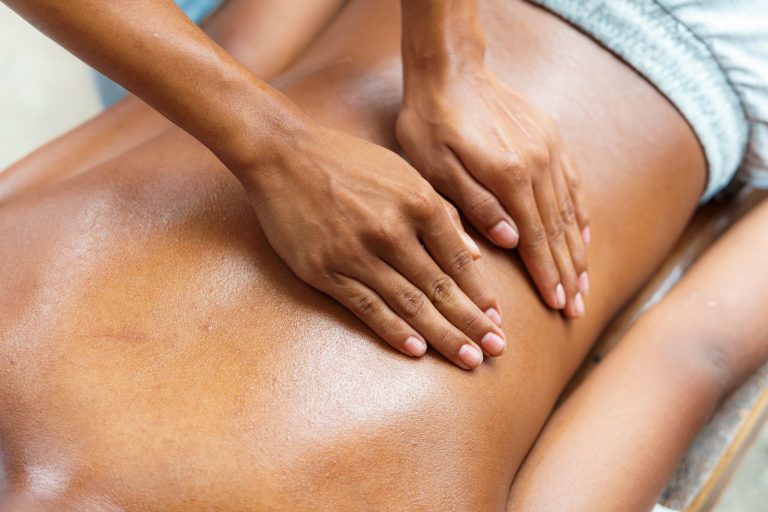
This part is about BUFF, and none of the dermatology above was a test of BUFF PRO. BUFF & GLOW is a 10 to 15 minute body-care service that pairs exfoliation, hydration and massage for smoother-feeling, radiant-looking skin, in three steps: polish with BUFFSMOOTH, wipe the skin with a clean, warm, damp towel, then finish with body butter for a relaxing massage and soft, moisturized skin. It sits alongside the services you already offer, and it gives your client a feel-good massage as part of the ritual rather than a procedure.
If your menu includes spray tans, waxing or body treatments, step one gives you a consistent way to start a service with smooth-feeling skin, and the full ritual works as its own add-on. Price it from your own costs and local market; the pro page has the current kits and pricing.
Every method on this list has its place. If you want a smoothing step that feels like a treat and has clients running a palm down their arm before they reach the front desk, give your menu a little BUFF.