
Your wax was perfect. Skin was smooth for days. Then, somewhere around day four or five, a few tender little bumps show up along the bikini line like uninvited guests at an after-party. Ingrown hairs are one of the most common hiccups after waxing, and the good news is that a handful of habits, done in the right order, can make them a lot less likely.
Here is why they happen, what to do in the first two days, and the routine that keeps the weeks after feeling smooth.
Why bumps follow a wax
Cleveland Clinic describes an ingrown pubic hair as one that grows back in the wrong direction after shaving, waxing or plucking: instead of coming up through the surface, it curves and gets trapped under the skin. Pubic hair tends to be coarser and curlier than other body hair, which makes it more likely to curve back in, and friction from clothing raises the odds (Cleveland Clinic, Ingrown Pubic Hair). The NHS lists waxing, plucking and threading alongside shaving as things that can lead to ingrown hairs, and notes that coarse or curly hair makes them more likely (NHS, Ingrown hairs).
Some redness right after a wax is normal too. Cleveland Clinic says bumps and redness are common straight after waxing, are more likely when the skin was not prepped well, and usually settle on their own (Cleveland Clinic, What To Know Before Getting a Brazilian Wax).
The first 48 hours: do less than you think
- Skip hot baths, saunas and tight clothing for 24 to 48 hours, as Cleveland Clinic advises, and keep your hands off the area.
- Wear loose cotton. Nothing with a seam pressing on freshly waxed skin. If you train, rinse and change out of sweaty clothes right away.
- Soothe, do not scrub. The AAD suggests cold packs if it is tender, avoiding hot showers, loose clothing, and an oil-free or non-comedogenic moisturizer (AAD, Hair removal: How to wax).
- Hold the exfoliation. Give skin a couple of days and wait until redness has settled before you reach for anything grainy.
Once the redness settles: gentle, regular exfoliation
The NHS suggests an exfoliating scrub to help release trapped hairs, and Cleveland Clinic suggests gently scrubbing with a clean, warm washcloth as a home remedy for an ingrown. The AAD’s advice on how to do it kindly:
- Be gentle. Small circular motions for about 30 seconds with a scrub, or short, light strokes with a brush or sponge, then rinse with lukewarm water.
- Match the method to your skin. Dry, sensitive or acne-prone skin may do better with just a washcloth and a mild chemical exfoliant. If you have a darker skin tone or tend to get dark spots after irritation, avoid aggressive scrubbing, which can lead to more pigmentation.
- Moisturize right after. Exfoliating can be drying.
- Do not overdo it. Too much leaves skin red and irritated. Start once or twice a week and adjust.
Source: AAD, How to safely exfoliate at home.
Keep the skin soft
Cleveland Clinic recommends a non-greasy, lightweight moisturizer after hair removal to keep skin soft and prevent irritation. After a shower, on slightly damp skin, is an easy habit to keep. You want a soft surface, not a thick coating.
Between appointments
- Put the razor down if you can. The NHS says the best way to prevent ingrown hairs is not shaving, and Cleveland Clinic notes that hair needs a few weeks of growth for the next wax to grip.
- Do not pick or squeeze. Both the NHS and Cleveland Clinic warn this can damage skin, invite infection and leave a dark mark.
- Keep friction down. Cotton underwear, looser bottoms on long sitting days, and getting out of damp workout clothes promptly.
- Keep a rhythm. Cleveland Clinic says a Brazilian usually lasts three or four weeks, and that with regular waxing hair often grows back softer and thinner.
Questions worth asking your waxer
- Which direction are you applying and removing the wax in my problem spots? Cleveland Clinic notes wax should go on in the direction of hair growth and come off against it.
- Would hard wax or soft wax suit my skin better, and why?
- Where does my hair grow in more than one direction? Those are the spots to be extra gentle with at home.
If one has already popped up
- Warm compress. Cleveland Clinic suggests a warm, wet washcloth for 10 to 15 minutes, up to four times a day, to soften the skin so the hair comes out sooner.
- Tweeze only what is already out. If part of the hair is visible above the skin, Cleveland Clinic says you can grasp it gently with clean tweezers. Never break the skin to get at it.
- Pause hair removal on that spot until it clears, since removing hair over an ingrown can make it worse.
- Know when to get help. See a doctor if it is very painful, hot or swollen, if pus is draining or redness is spreading, or if you have a fever or feel unwell (NHS; Cleveland Clinic). Cleveland Clinic also advises seeing a provider if ingrowns keep coming back despite home care.
Where BUFF fits
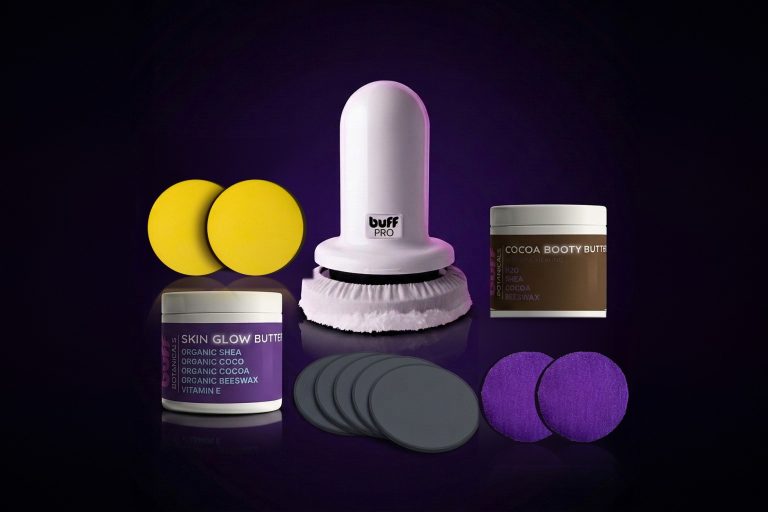
This part is about BUFF, not the dermatology above, and BUFF is not a treatment for ingrown hairs or a way to prevent them. Once your skin has calmed down after a wax, BUFF PRO with a BUFFSMOOTH exfoliator is an easy way to polish the outer surface so skin feels smoother, without scrubbing harder wherever your hand happens to be strongest. Swap to a lotion mitt and it helps spread your moisturizer, too. Use it as directed, and skip any skin that is still red, tender or broken.
Two quiet days, a gentle polish once things settle, daily moisture and hands off the bumps. Your wax did its job; now your routine gets to strut a little too.