Search for the best exfoliator for ingrown hairs and you get a hundred jars, a few gadgets and zero framework. Here is the cheeky truth: almost anything will polish your skin once. The winner is the one you will happily use a couple of times a week, on the exact spots where bumps like to show up, without leaving that skin cranky. So instead of a ranked list, here are the criteria, an honest look at the options, and a quick chart.
What you are asking an exfoliator to do
An ingrown hair is one that curls back or grows sideways into the skin instead of up through the surface. The NHS says ingrown hairs are more likely with coarse or curly hair and in areas you shave, wax or pluck, and it lists an exfoliating scrub among the things that can help release trapped hairs (NHS, Ingrown hairs). The NHS also notes that the best way to prevent them is not shaving, so exfoliation is a supporting habit, not a fix on its own.
Judge any exfoliator on four things:
- Gentle enough to repeat. The AAD warns that over-exfoliating leaves skin red and irritated (AAD, How to safely exfoliate at home). Something you abandon by week two is not helping.
- Right for your skin type. The same AAD page says dry, sensitive or acne-prone skin may do better with just a washcloth and a mild chemical exfoliant, and that people with darker skin tones, or anyone who gets dark spots after irritation, should avoid strong chemical or mechanical exfoliation because it can lead to more pigmentation.
- Kind to delicate areas. A bikini line is not a shin. Grit that feels great on your legs can be far too much a few inches higher.
- Easy to reach where you need it. Backs of thighs and the crease at the top of the leg are awkward. Whatever you choose has to get there evenly and comfortably.
The options, honestly
The AAD sorts at-home exfoliation into two families: mechanical (a brush, pad, sponge or scrub that physically removes dead skin cells) and chemical (acids such as alpha and beta hydroxy acids that dissolve them).
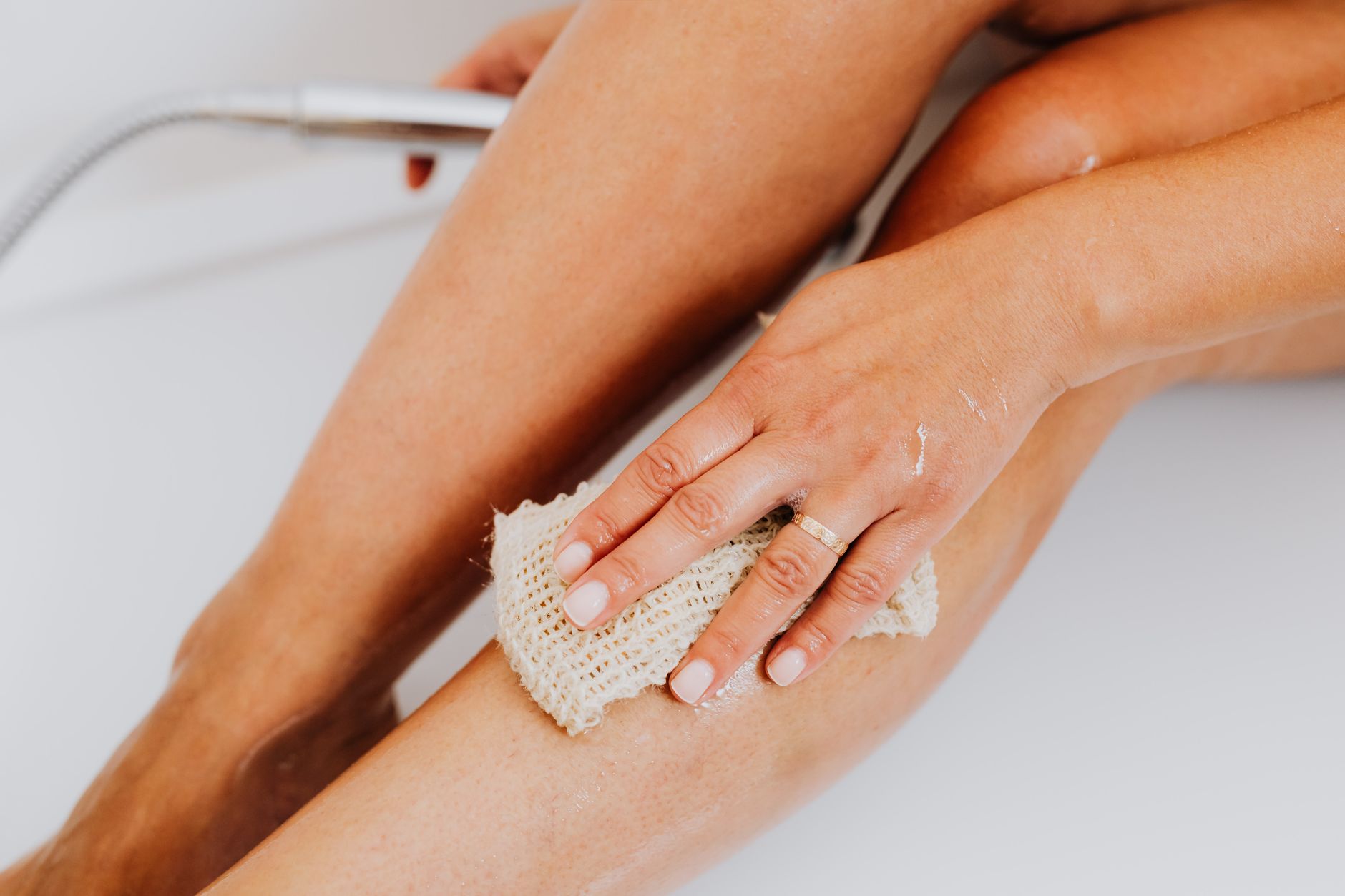
Washcloth. Free, already in your shower, and the gentle option the AAD names for dry or sensitive skin. Cleveland Clinic also suggests gently scrubbing an ingrown area with a clean, warm washcloth (Cleveland Clinic, Ingrown Pubic Hair). Use a clean one each time.
Exfoliating gloves and mitts. Cheap, and you can feel what you are doing. Pressure depends on your hand, so go lightly on thin skin.
Dry brushing. Quick and pleasant. Choose soft bristles for delicate areas, and use short, light strokes as the AAD suggests for any brush.
Salt and sugar scrubs. Satisfying and inexpensive. Coarse grains can be too harsh on freshly waxed or shaved bikini skin, so pick a fine texture, apply gently in small circles for about 30 seconds, and rinse with lukewarm water, per the AAD.
Chemical exfoliants (glycolic, lactic, salicylic). Cleveland Clinic lists glycolic acid among ingredients that can help with ingrown pubic hairs. The trade-offs: they can sting on just-waxed or shaved skin, the AAD cautions about combining exfoliation with retinoids, retinol or benzoyl peroxide, and the FDA says alpha hydroxy acids increase the skin’s sensitivity to the sun, so use sun protection while you use them (FDA, Alpha Hydroxy Acids).
Professional microdermabrasion. A provider uses a handheld device to remove the top layer of skin. The AAD says most patients need a series of treatments, that results tend to be temporary, and that anyone who has taken isotretinoin in the past six months has a higher risk of complications (AAD, Microdermabrasion: FAQs). A per-visit option rather than an at-home habit.
At a glance
| Option | Type | Watch out for | Good fit for |
|---|---|---|---|
| Washcloth | Mechanical, mild | Use a clean one each time | Dry or sensitive skin, a gentle baseline |
| Gloves and mitts | Mechanical | Pressure varies with your hand | Legs and arms on a budget |
| Dry brush | Mechanical | Stiff bristles on delicate skin | A quick, light habit |
| Salt or sugar scrub | Mechanical | Coarse grains on just-waxed skin | Shins, elbows, heels |
| Acids (AHA, BHA) | Chemical | Stinging, sun sensitivity, mixing with retinoids | Skin that tolerates them, with sun protection |
| Microdermabrasion | Professional | Recent isotretinoin, cost of a series | An occasional professional treatment |
What no exfoliator can do
- Free a deep, inflamed hair. Cleveland Clinic suggests a warm, wet washcloth for 10 to 15 minutes, up to four times a day. See a doctor if a bump is very painful, hot or swollen, drains pus, or comes with a fever (NHS, Cleveland Clinic).
- Change your hair. Coarse, curly hair will always be more prone to curving back.
- Out-work friction. Tight seams, damp gym clothes and shaving in between waxes can undo a lot of good habits.
- Get better with more. If skin stings or looks red and irritated, do less.
Choosing by situation
- Bikini line after waxing. Nothing grainy until redness settles, then the gentlest option you have, once or twice a week, followed by moisturizer.
- Legs you shave. Keep exfoliation and shaving on different days so skin gets a break. Shave with a moisturizing cream in the direction hair grows, and swap disposable razors after five to seven shaves, as the AAD advises (AAD, Razor bump prevention).
- Underarms. The mildest method only, and skip it on tender days.
- Sensitive or reactive skin. A washcloth and, if tolerated, a mild chemical exfoliant, as the AAD suggests. Start once a week.
- Not sure what your skin needs? A board-certified dermatologist can help you decide whether exfoliation suits you at all.
Where BUFF fits
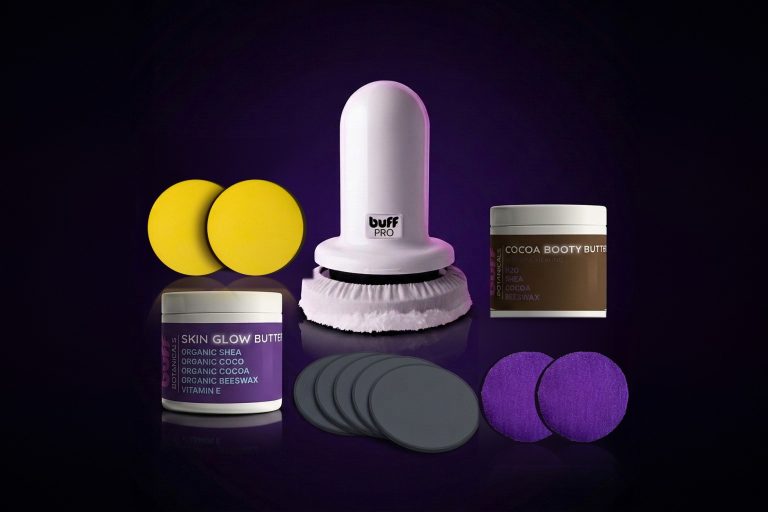
This part is about BUFF, not the dermatology above, and BUFF is not a treatment for ingrown hairs or a way to prevent them. BUFF PRO with a BUFFSMOOTH exfoliator polishes the outer surface of your skin so it feels smoother, and because the device supplies the multi-axis, random-orbital motion, you guide it rather than scrub. It is handy for the backs of the legs your hand never reaches comfortably. Swap to a lotion mitt and it helps spread moisturizer afterward. Use it as directed, and skip skin that is freshly waxed, irritated or broken.
Gentle, regular and right for your skin is the bar, not strongest on the shelf. Pick the option you will actually look forward to, then give your skin a little polish and a lot of moisture. Go BUFF yourself.