Your injectors are booked solid, your laser rooms hum all day, and your menu is about as full as a menu can get. Congratulations, and also: now what? Growing from here usually means raising prices, hiring, or signing a bigger lease, and all three are slow and expensive. Add-on services are the fourth option, and the only one you can switch on next week. The catch is that the add-on with the prettiest margin percentage is often not the one that earns the most.
Four numbers that decide whether an add-on earns its place
Percentage margin can mislead in a service business. A treatment with a very high product margin that holds a room for forty minutes can earn less than one with a lower margin that takes fifteen. Run every candidate through these four instead:
- Gross service sales per room-hour. The service price divided by the room time, including turnover. As a hypothetical: a 15-minute add-on at $150 works out to $600 per room-hour; a 40-minute add-on at the same $150 works out to $225. Both are gross service sales, before labor, supplies, overhead and taxes.
- Supply cost per service. The real consumable figure, per client, in dollars, taken from your own supplier invoices. It also tells you how much room you have before a discount starts to hurt.
- Who can legally perform it. If only your top-earning provider can do it, you have not added capacity, you have moved it. Scope-of-practice rules vary by state, so check yours.
- What it pulls behind it. Rebook rate and retail attachment. An add-on that sends a client home with something to use up and repurchase is a different business from one that ends at checkout.
One softer test: does it compete with your primary service, or complement it? An add-on a client might choose instead of a facial is not really an add-on. It is a discount.
The usual candidates, compared on fit
Every one of these works somewhere. The question is fit, not quality, and pricing varies so much by market that the only numbers worth using are your own.
LED light therapy. Beautifully passive: press start and step away, with little in the way of consumables, and it pairs with almost anything. The limit is perceived value. Clients know it is a light they lie under, which makes it hard to price high, and it still ties up a bed.
Dermaplaning. Fast, with high perceived value and a simple consumable. The constraints: it is face-only, results depend on the provider’s skill, licensing rules differ by state, and it competes for the same short slot as every other facial add-on you offer.
Add-on chemical peels. A real ticket bump. The scheduling cost is the aftercare: for a light, or “lunchtime,” peel the American Academy of Dermatology describes 1 to 7 days of healing, with redness and then scaling, and daily sunscreen afterward. It also notes some patients need a pre-peel skin care plan for 2 to 4 weeks (AAD, Chemical peels: FAQs). That makes a peel hard to drop in before an event or stack with other services.
Device facials and microdermabrasion. High perceived value, and clients ask for them by name. The catch is capital and consumables together: equipment, tips and serums, plus a room for a full slot. Strong as a primary service, heavy as an add-on.
Lash and brow tinting. Quick and easy to attach to anything, with a small ticket. Good for filling gaps, not a growth engine.
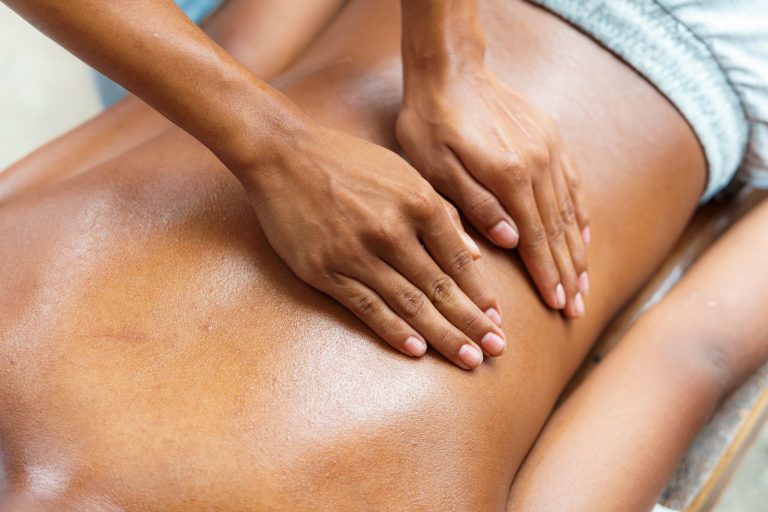
Body exfoliation with a butter finish. The least crowded category on this list. It works on legs, arms, back and décolletage, skin no facial add-on touches. Its weakness is newness: clients do not walk in asking for it, so it lives or dies on whether your team has a sentence to offer it.
Side-by-side
| Add-on | Where it works | Ongoing consumable | Main constraint |
|---|---|---|---|
| LED light therapy | Face, some body | Minimal | Low perceived value; holds a bed |
| Dermaplaning | Face | Blades | Skill and licensing; crowded facial slot |
| Chemical peel add-on | Mostly face | Peel solution | Prep and aftercare; scheduling around healing |
| Device facial | Face | Tips, serums | Capital cost; longer room time |
| Lash or brow tint | Lashes, brows | Tint | Small ticket |
| Body exfoliation + butter | Legs, arms, back, décolletage | Exfoliator, butter | New to clients; needs a script |
The case for looking below the neck
Look at where the crowding is. Your facial add-on list may already hold several services competing for the same short slot and the same client wallet, and your local market has already set expectations on price for most of them. Meanwhile the client on your table has two legs, two arms, a back and a décolletage that nothing on your menu currently addresses. A body add-on is not a substitute for the facial or the injectable, so it can be added in the same visit without either service giving anything up.
Run the numbers for your own room
Start from your own menu: what you would charge for a full-body exfoliation and massage add-on, and how many you could realistically book in a week.
A worked example: at a $150 service price and four add-on bookings a week, that is $150 × 4 = $600 in added weekly service sales, before labor, supplies, overhead and taxes. That is gross service sales, not profit. To get closer to the real picture, subtract your provider’s pay for the time, your supply cost per service from your own invoices, and your share of overhead.
The honest limit is attach rate. A menu item nobody mentions attaches to zero, which is why the next two sections matter more than the math above.
Where it slots into an existing schedule
- Before a spray tan. The AAD’s advice for self-tanner starts with exfoliating for even coverage (AAD, How to apply self-tanner), so prep is an easy, logical pairing.
- On off-weeks between other treatments, only on skin your own protocols have cleared, never on freshly treated skin.
- As a standalone seasonal service for sandal, wedding and vacation season.
Two things that sink a good add-on
First, no script. If the offer is a line on a laminated menu, it does not exist. It needs one sentence at booking and one in the room, said the same way by everyone: “Want me to add a BUFF & GLOW for your legs and arms? It takes about fifteen minutes and your skin will feel smoother.” Track attach rate by provider for two weeks and you will learn exactly who is saying it.
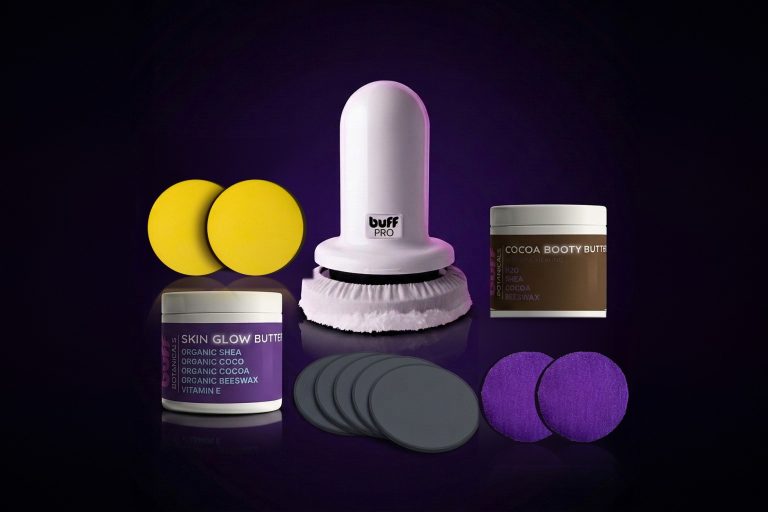
Second, no retail follow-through. A client who leaves delighted with how their skin feels, with nothing to keep the routine going at home, is a rebook left on the table. Butters, mitts and exfoliator packs are the reorder business behind the service.
Where BUFF fits
This part is about BUFF, and the AAD material above is general information, not a statement about BUFF. BUFF & GLOW is a 10 to 15 minute body-care service in three steps: BUFF PRO with a BUFFSMOOTH exfoliator to polish the surface so skin feels smoother, a warm, damp towel to hydrate, and a body butter finish for a feel-good massage that leaves skin feeling soft and moisturized. It sits alongside the services you already offer. The steps, kits and pricing are on the BUFF page for spa, skincare and aesthetics professionals.
The best add-on is not the one with the flashiest margin. It is the one your rooms can fit, your team can offer in one sentence, and your clients actually want more of. Do the room-hour math with your own numbers, then let your menu get a little more BUFF.