Good news: a glow on your body takes less than your bathroom shelf suggests. It mostly comes down to a few small habits done often, plus one bigger step once a week or less. Clean gently, moisturize while your skin is still damp, protect what the sun can reach, and clear away dull surface skin on a schedule your skin can handle. Smoother-looking skin catches the light more evenly, and that is most of what a glow is.
This guide lays out a realistic body care routine you can keep up at home, with the advice behind each step linked to the dermatologists who publish it.
Every day: three steps
The daily part of the routine takes a few minutes and happens around your shower.
- Cleanse gently. Keep showers to about five to ten minutes in warm water, not hot, and use a gentle cleanser. That is the advice in the American Academy of Dermatology’s tips for relieving dry skin. Pat yourself dry with a towel rather than rubbing.
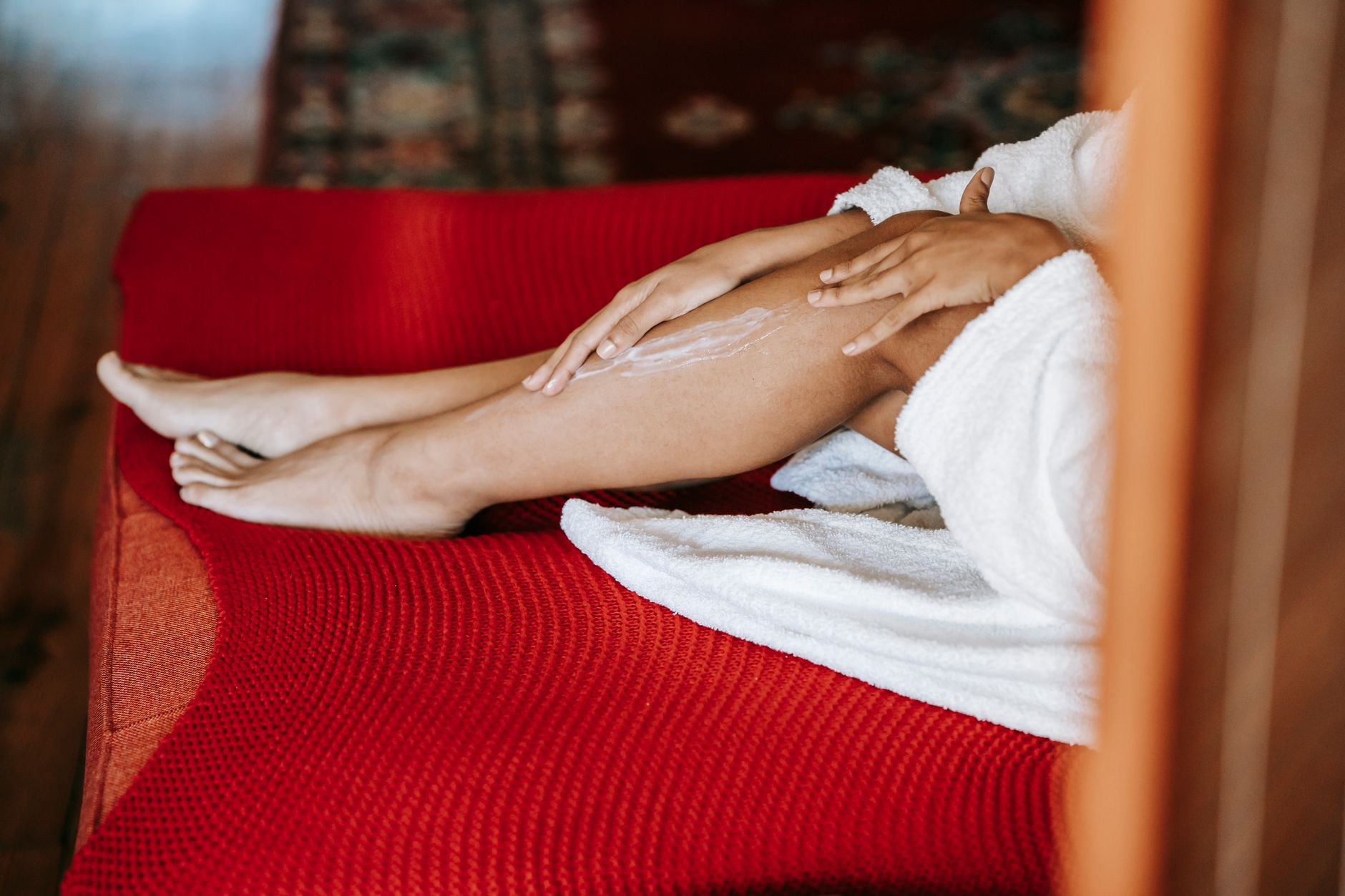
- Moisturize on damp skin. The same AAD page says to apply moisturizer while your skin is still damp after a shower or bath, and notes that ointments and creams add more moisture than lotions. Shea butter is one of the ingredients it lists to look for.
- Sunscreen on exposed skin. Arms, legs, the back of your neck, the tops of your feet in sandals. The AAD’s sunscreen FAQs recommend a broad-spectrum, water-resistant sunscreen with SPF 30 or higher, reapplied about every two hours outdoors and after swimming or sweating.
Sunscreen is easy to skip on your body because it feels like a face step. Skin that has been tanning or burning all summer rarely looks even, so this one earns its place.
Once a week or less: exfoliate
Exfoliation removes the dead cells that build up on the surface and make skin look dull and feel rough. It is also the step most people overdo.
The AAD’s guide on how to safely exfoliate at home does not set one schedule for everyone. It says the more aggressive the method, the less often you need it, and warns that over-exfoliating can leave skin red and irritated. A sensible place to start is once a week, then adjust to how your skin responds.
From that same AAD guide:
- Be gentle. With a brush or sponge, use short, light strokes. With a scrub, use small circles for about 30 seconds and rinse with lukewarm water.
- Skip it on broken skin. Never exfoliate over open cuts or wounds, or on sunburned skin.
- Moisturize right after. Freshly exfoliated skin needs moisture straight away.
- Check what you already use. Products with retinol or benzoyl peroxide, or a prescription retinoid, can make skin more sensitive, and exfoliating on top of them may make dryness worse.
- Mind your skin tone. The AAD advises avoiding strong chemical or mechanical exfoliation if you have a darker skin tone or tend to get dark spots after burns, bug bites or breakouts.
Redness that lingers or skin that stings when you moisturize means it is time to back off. Wait until it calms down and go lighter next time.
The extras: shaving, dry patches, elbows, knees and heels
These are the spots that make a body care routine look finished.
- Shaving. The AAD’s page on how to shave says to wet your skin and hair first, use a shaving cream or gel, shave in the direction the hair grows, rinse after each swipe, and change the blade or throw away a disposable razor after five to seven shaves. Shaving in the direction of growth is the step it calls important for avoiding razor bumps and burn.
- Ingrown hairs. If bumps keep coming back or look inflamed, a dermatologist is the right person to see.
- Dry patches. Reach for a richer cream or butter instead of a thin lotion, following the AAD’s note that creams and ointments hold in more moisture.
- Elbows and knees. They get rough first and get forgotten in the shower. Give them a little extra moisturizer every day and a little extra attention on exfoliation day.
- Heels. The AAD’s advice for dry, cracked heels is to moisturize right after bathing while the skin is still damp, and to apply plain petroleum jelly before bed, with socks to keep it off your sheets. It also says severe cracks, or cracks that do not improve, are a reason to talk to a board-certified dermatologist.
Any rash, persistent itch or patch that does not respond to moisturizer is a question for a dermatologist, not for your routine.
Where BUFF fits
The weekly exfoliation step is where hand methods are least consistent. Pressure drifts from one leg to the other, the backs of your arms get less attention than the fronts, and a full-body scrub takes a while.
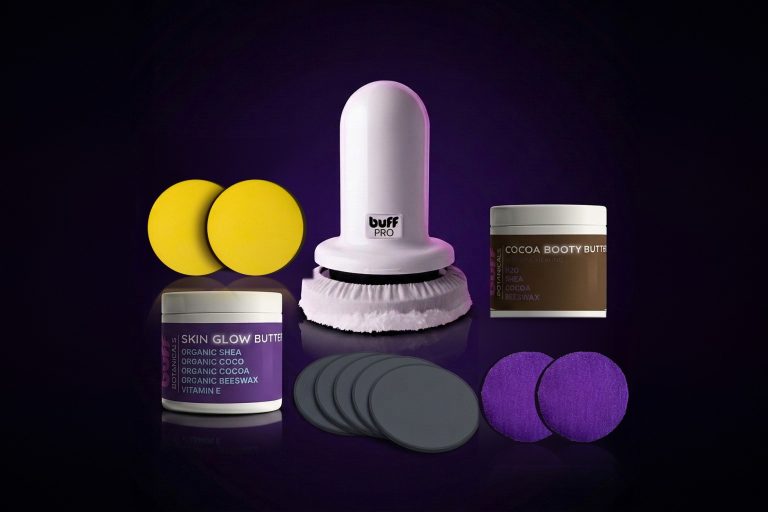
The BUFF PRO handles that step for you. It moves the BUFFSMOOTH exfoliator over your skin in fast random-orbital circles, so the motion does the work and the pressure stays even from ankle to shoulder.
The BUFF at Home page describes a three-step BUFF & GLOW ritual:
- Exfoliate with BUFFSMOOTH and BUFF PRO.
- Hydrate with a warm, damp towel.
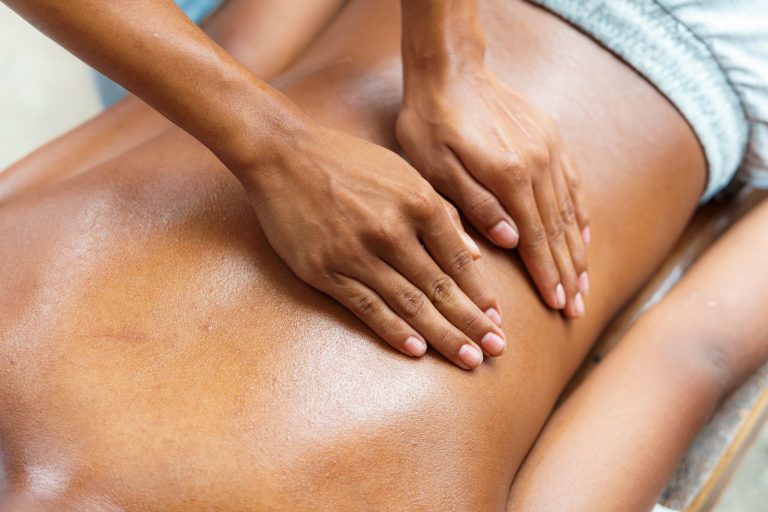
- Finish with BUFF PRO and Skin Glow Butter as a massage.
That page suggests the full ritual every two weeks or monthly, which sits comfortably inside the AAD’s advice not to overdo it. On that page, the Advanced Home Fit + Skin Kit brings the device, exfoliator pads, lotion mitts and body butters together for home use.
For the daily moisture step, Skin Glow Butter is made with organic shea butter, organic coconut oil, organic cocoa butter, beeswax and vitamin E, with no synthetic fragrance, parabens or sulfates.
Its page says to warm a small amount between your hands and massage it into clean skin after showering or exfoliating, with extra attention on elbows, knees, hands and feet. It contains beeswax, so it is not vegan, and the page suggests a patch test if your skin is sensitive.
This is where the BUFF PRO turns moisturizing into a massage. Slip on a Violet Lotion Mitt and the device’s vibration and random-orbital motion work Skin Glow Butter, or any lotion or oil you love, across your skin in even, steady strokes. It covers large areas like your legs and back faster and more evenly than hands alone, including the spots your hands can’t reach.
Your week on one list
- Short, warm showers with a gentle cleanser.
- Pat dry and moisturize while your skin is still damp.
- Broad-spectrum SPF 30 or higher on any skin the sun can reach.
- Exfoliate once a week at most to start, gently, then moisturize right away.
- Shave in the direction of growth.
- Extra moisturizer on elbows, knees and heels, and petroleum jelly on heels at night if they crack.
- Anything that stings, spreads or will not settle goes to a dermatologist.
Pick one day this week as your exfoliation day and put it in your calendar. Everything else happens in the shower you are already taking. Small habits, a little BUFF, a lot of glow. If you want that weekly step done the same way every time, the home kit has everything for it. BUFF = ❤️