A spray tan is a little bit of magic in a bottle, and like most magic, the real trick happens before the curtain goes up. Prep your skin well and the color goes on smooth and wears off politely. Skip the prep and your knees, ankles and elbows tend to tell on you. The good news: the prep is simple, you probably own most of what you need, and it can be the nicest ten minutes of your week.
The plan in one line: exfoliate evenly a day or so before, show up with clean, dry skin, and follow your tan artist’s instructions over anything you read online, this page included.
Why the surface of your skin decides the result
The color in a spray tan comes from DHA, a sugar compound that reacts with proteins in the cells of your skin’s outer layer. Because it only touches that top layer, the tan is temporary: as your skin naturally sheds those cells, the color goes with them, which Cleveland Clinic says is why a spray tan lasts about five to ten days (Cleveland Clinic, Are Spray Tans Safe?). The FDA describes DHA the same way, as a color additive that darkens skin by reacting with amino acids at the skin’s surface (FDA, Sunless Tanners & Bronzers).
That is why prep matters. The American Academy of Dermatology’s self-tanner advice starts with exfoliating first, spending a little more time where skin is thickest, on the elbows, knees and ankles, and then drying your skin so the tanner goes on evenly. It also notes those same joints tend to absorb more tanner than the rest of your skin (AAD, How to apply self-tanner).
Plan the week around your appointment
- Ask for your artist’s prep sheet when you book. Timing for shaving, waxing and exfoliating varies with their solution, and they know it best.
- Exfoliate ahead of the day, on the schedule your artist gives you, so your skin has time to settle.
- Ask what they want on your skin the day of. If they say clean and bare, skip lotion, oil and deodorant that morning.
- Dress for the ride home. The AAD suggests loose clothing and avoiding sweat for a few hours after self-tanner, so loose clothes and open shoes are an easy choice.
The home options, and how to use each gently
The AAD sorts at-home exfoliation into two kinds: mechanical, which uses a tool such as a brush, pad, sponge or scrub, and chemical, which uses acids such as alpha and beta hydroxy acids to dissolve dead skin cells. It advises choosing based on your skin type (AAD, How to safely exfoliate at home).
- A washcloth. The simplest option, and the one the AAD’s self-tanner tips name first.
- Sugar or salt scrubs. Apply gently in small circles, about 30 seconds, then rinse with lukewarm water, as the AAD suggests for any scrub.
- Exfoliating gloves, brushes and sponges. The AAD’s advice here is short, light strokes.
- Acid body products. A chemical option. If your skin is dry or sensitive, the AAD notes a washcloth and a mild chemical exfoliator may suit you better than scrubbing. Do not try a brand-new product right before a tan.
Doing it well, by hand
- Work from your feet upward so nothing gets skipped.
- Give a little extra time to elbows, knees and ankles, as the AAD suggests.
- Keep the pressure light everywhere. Scrubbing harder is not better prep.
- Rinse well with lukewarm water, pat dry, and moisturize afterward, since the AAD notes exfoliating can be drying.
When to hold off
The AAD says never to exfoliate over open cuts, wounds or sunburned skin, and warns that over-exfoliating can leave skin red and irritated. It also flags that prescription retinoids and products with retinol or benzoyl peroxide can make skin more sensitive, and that people with darker skin tones should avoid strong chemical or mechanical exfoliation because it can lead to dark spots. If your skin looks red or feels raw, let it calm down before your tan and talk to your artist.
Before you step into the booth
For spray tans done in a commercial booth, the FDA advises asking whether you will be protected from the spray around your eyes, on your lips and other mucous membranes, and from breathing it in or swallowing it. If the answer to any of those is no, ask for that protection before you go ahead. Cleveland Clinic adds that spray tan products can contain fragrances that irritate sensitive skin.
Making the color last
- Go easy on scrubbing while you want the color. The tan lives in the cells your skin is shedding, so exfoliating takes it off faster.
- Follow your artist’s guidance on when to shower for the first time.
- Keep using sunscreen. Cleveland Clinic is clear that a spray tan is not a base tan and does not protect you from sunburn, and the AAD recommends a broad-spectrum, water-resistant sunscreen with SPF 30 or higher every day.
- When it fades, exfoliate evenly and you have a fresh canvas for the next one.
Where BUFF fits
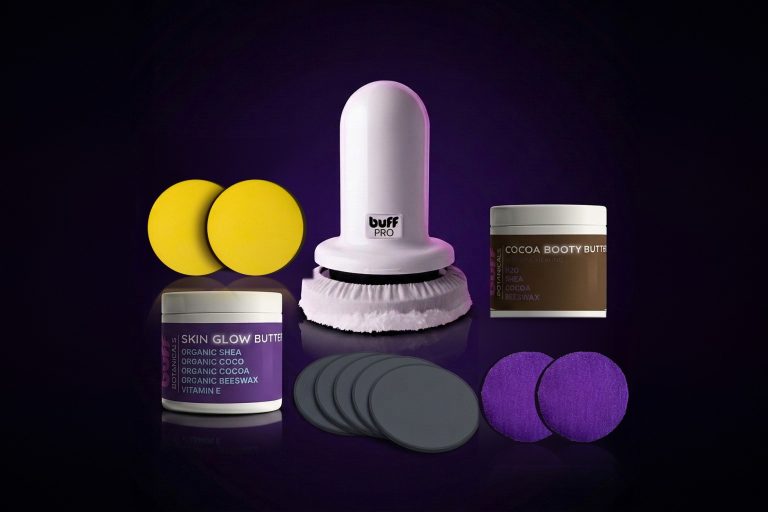
Everything above is general information from the AAD, Cleveland Clinic and the FDA, and none of it is a claim about BUFF. Here is the BUFF part. BUFF PRO with a BUFFSMOOTH exfoliator uses multi-axis, random-orbital motion to polish the surface of your skin so it feels smoother, one of the easy ways to do your exfoliating step if you would rather not scrub by hand. Use it as directed, on the same schedule your tan artist gives you, and skip any skin that is irritated or broken. Between tans, a Violet Lotion Mitt on BUFF PRO helps spread moisturizer or body butter down the backs of your legs you can never quite reach.
Some spray tan studios offer BUFF as part of their tan prep, so you can hand that step to a pro. Look for one on the BUFF PRO map.
Smooth first, then bronze. A little prep, a little patience, and your tan gets to be the star of the show instead of your knees. Go BUFF yourself, then go glow.